
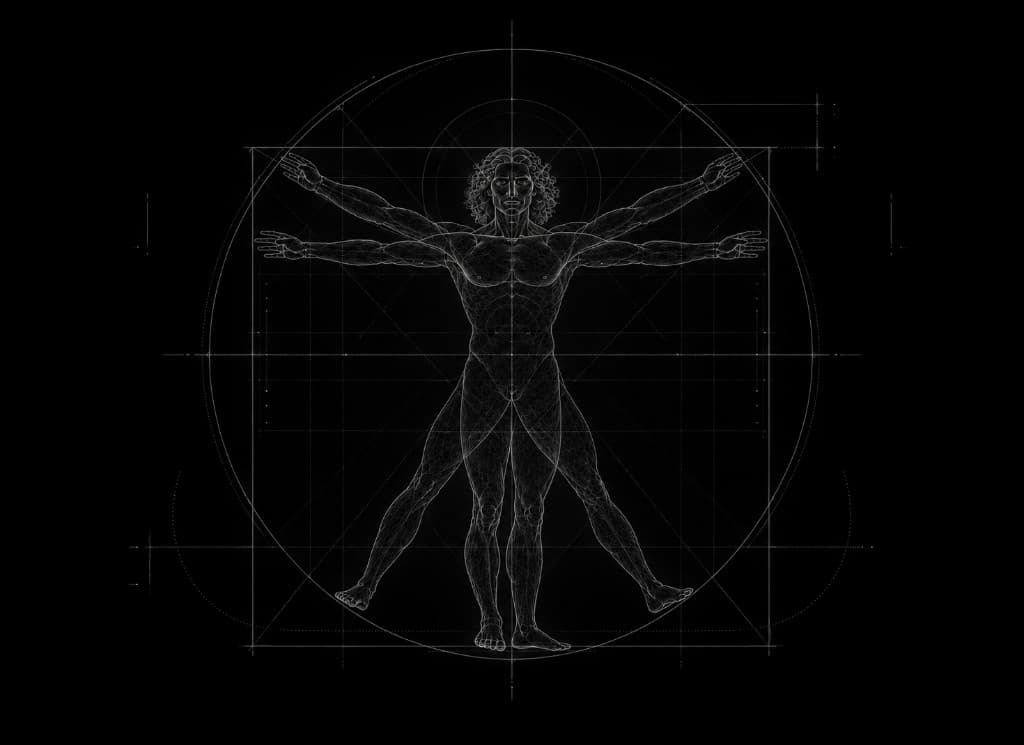
“Man is the measure of all things.”
Protagoras · 5th century BCE
2035
By 2035, prosthetics should fully synthesize biological function.
The premise
01
The prosthetic limb should not be treated as an accessory to the body. It should become part of the body’s functional system.
Today, prosthetics remain constrained by the categories in which they were created: mechanical feet, powered ankles, sockets, knees, liners, controllers. The human body does not experience itself in categories. It moves as one system — continuously sensing, adapting, stabilizing, transferring energy, responding to intent, and reshaping itself around the environment.
Genesis is building toward that same standard.
Our objective is not to make individual prosthetic components incrementally better. It is to progressively synthesize the functions of the biological limb: restoring natural movement, establishing sensory feedback, creating a seamless physical interface with the body, and building systems that adapt continuously to the human using them.
By 2035, the distinction between biological function and synthesized function should begin to disappear.
The architecture
Biological function is not one capability. It is the coordination of many.
- Movement
- Sensation
- Connection
- Adaptation
- Form
01
Movement
Reproduce the dynamics, power, and range of the biological limb.
02
Sensation
Restore information from the physical world to the human.
03
Connection
Create an interface between human and machine that feels increasingly native.
04
Adaptation
Continuously learn the human, their gait, their environment, and their intent.
05
Form
Build technology around the anatomy of the human body — not the inverse.
Restoration becomes synthesis.
Genesis Dynamics 2035