
10.10.2024
GEN-3 | On Device Intelligence
GEN-3 is our first prototype to bring mechanics, sensing, power, and onboard control together in a system worn by a person. Earlier generations let us develop and test individual parts. With GEN-3, we could examine the complete loop: sensing movement, computing a response locally, and using that response to drive the joint.
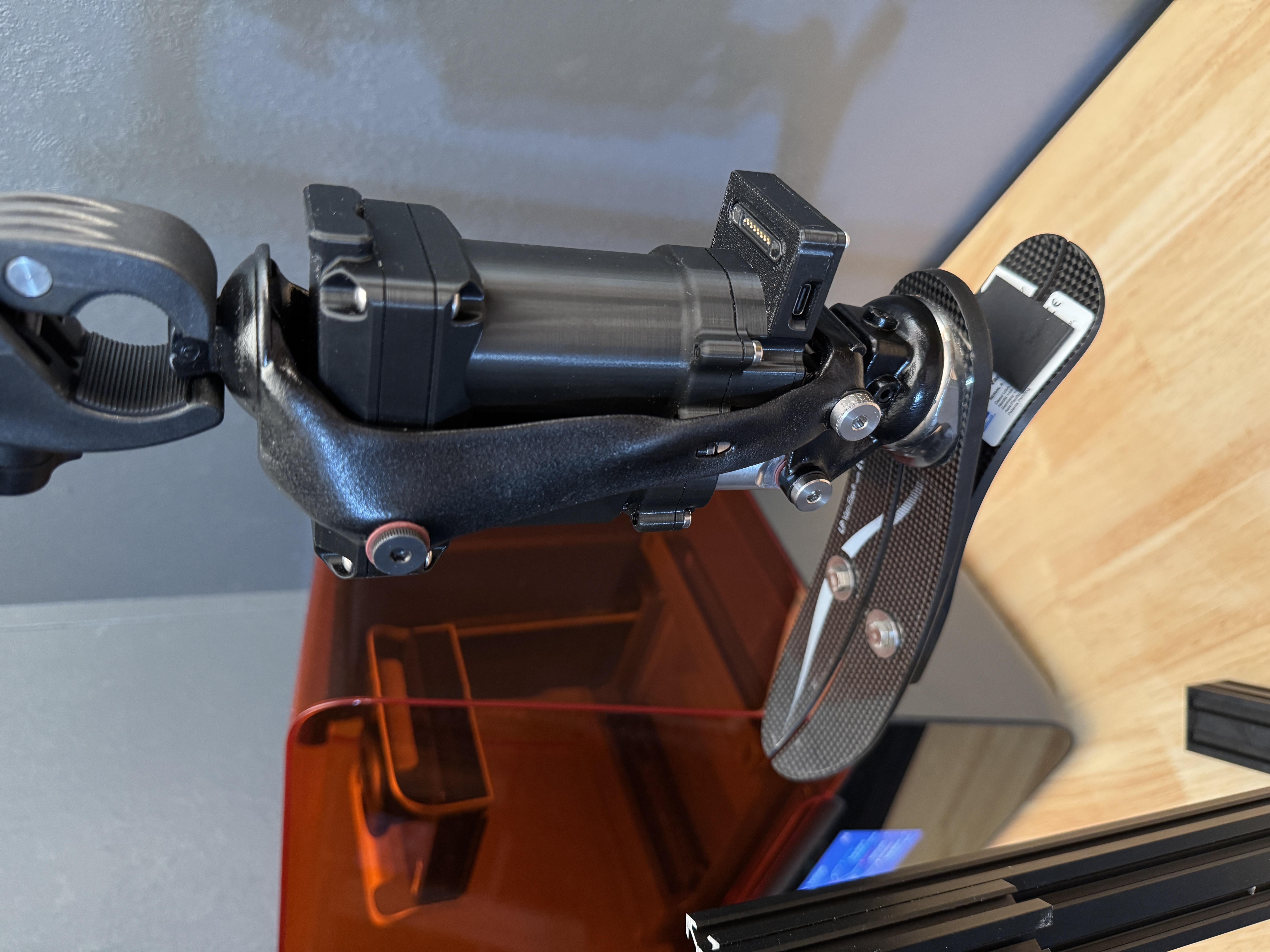
The question for this generation was whether we could run that control loop on the device, in real time, during on-body testing. GEN-3 demonstrated that we could. It remains an advanced prototype, and the work has given us a clearer view of both the architecture and its limitations.
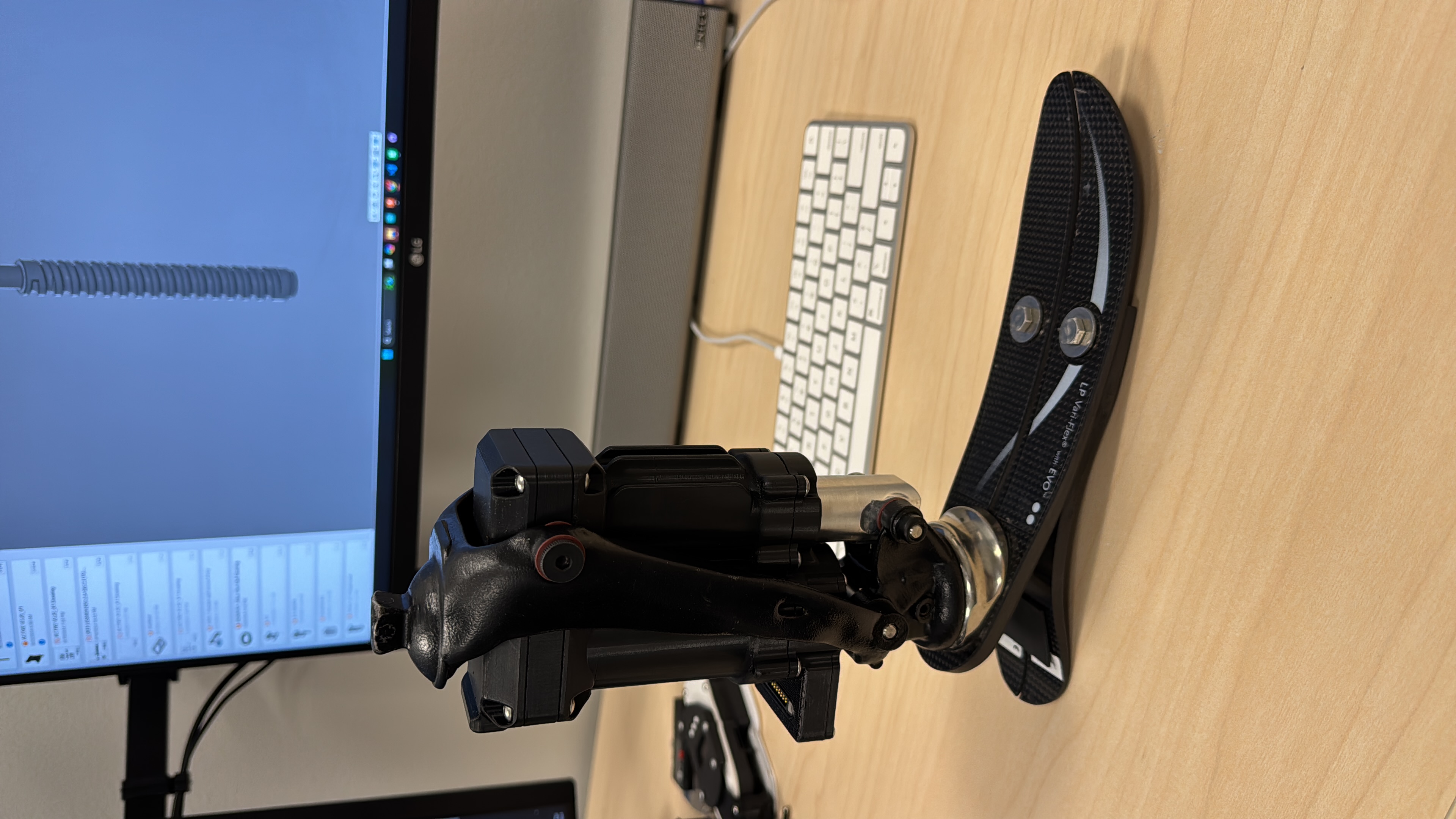
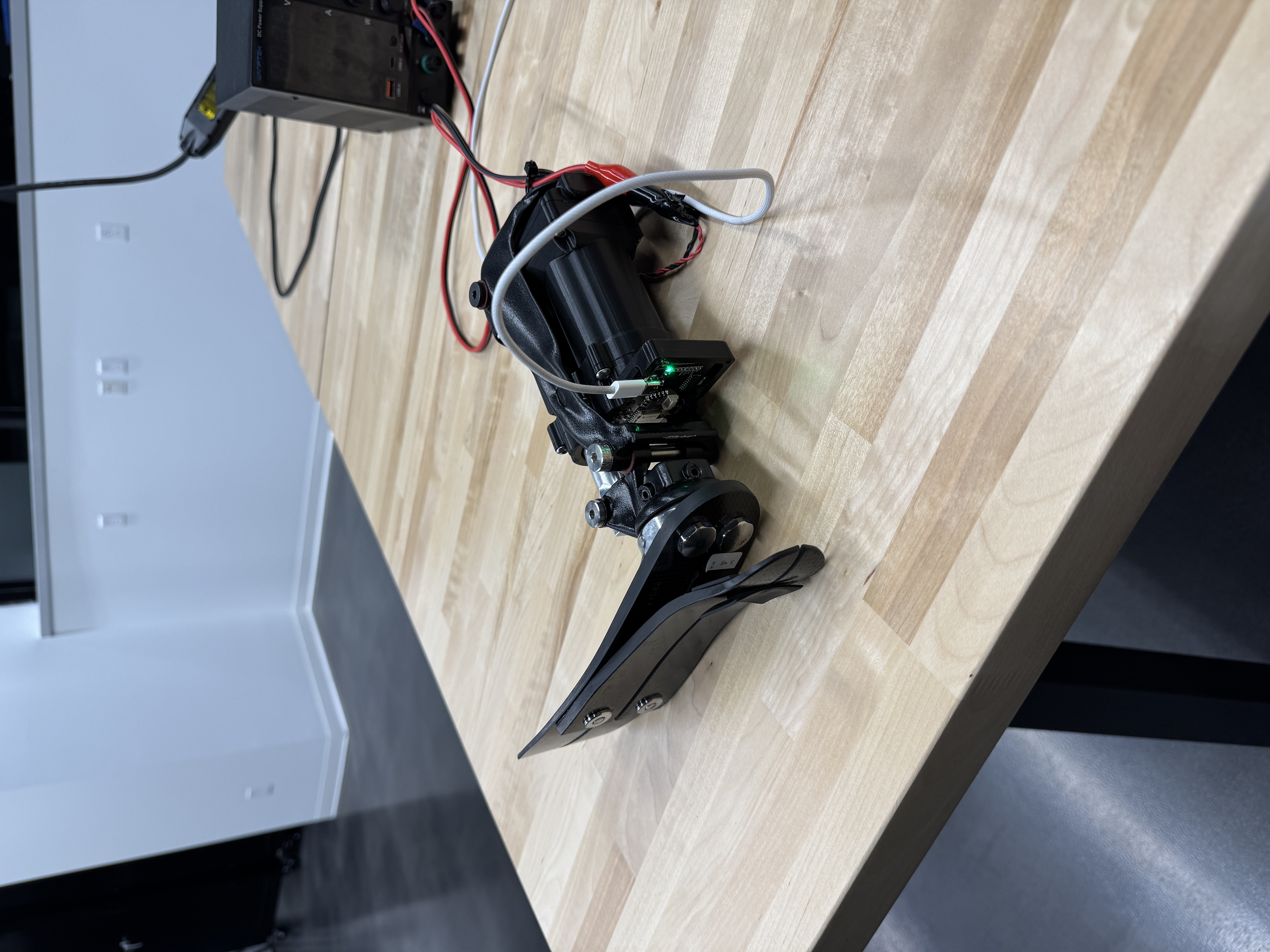
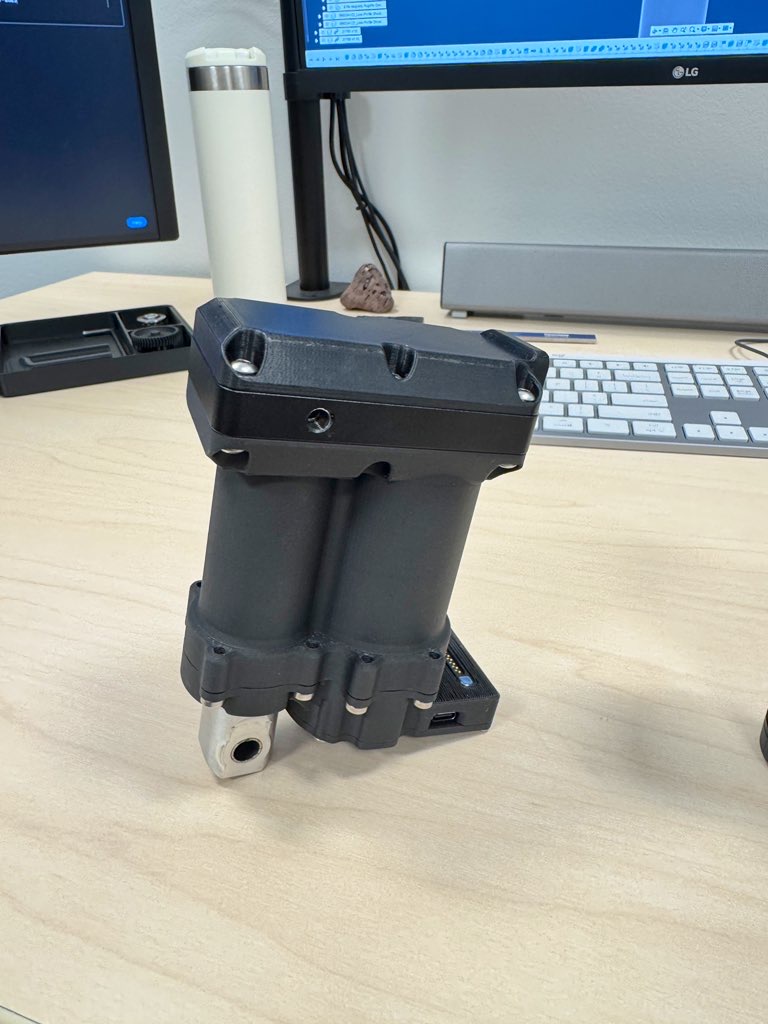
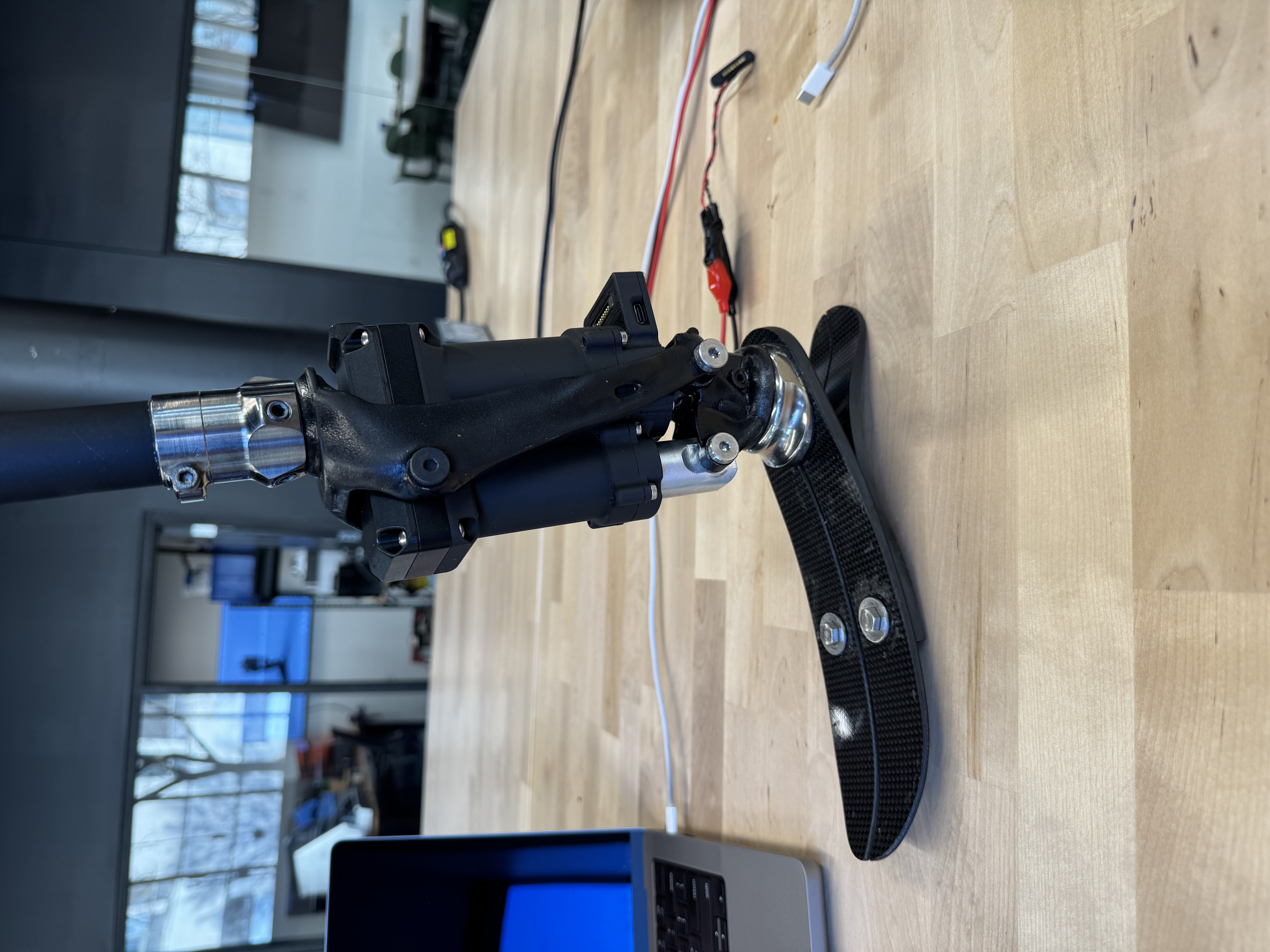
The controller uses incoming motion signals to infer the system’s state and generate actuator commands on the embedded hardware. That gives us a way to adjust output as movement and loading change. We’re developing this approach because the assistance needed from a joint changes throughout a step and between activities.
During testing, GEN-3 demonstrated on-body sensing, real-time inference within the available computing capacity, and closed-loop actuation driven by locally generated signals. Bringing those functions together let us study how the mechanical system, electronics, and control affect one another during movement.
The same testing exposed latency bottlenecks, thermal constraints, and mechanical inefficiencies under load. Operating beyond isolated bench tests makes those constraints harder to separate and more important to understand. They are now inputs to the design of subsequent generations.
Keeping the control computation onboard is important to the system we want to build. The joint needs to respond while the person is moving, without depending on a remote computer to make each control decision. GEN-3 gave us an end-to-end implementation of that approach on a worn prototype.
It also gives us a foundation for further work on embedded models, the data used to develop them, and the relationship between user intent and machine response. Those are steps toward shared control and more useful assistance. For this generation, the milestone is specific: the complete control loop is running on the device, and we can use what it reveals to improve the next design.